The thing nobody says out loud about developer credentials
Here is the uncomfortable part. The entire system for judging developers runs on signals that anyone can fake, and most people involved quietly know it. A resume is a list of assertions with no verification layer. A contribution graph rewards activity, not impact, and can be inflated by anyone who cares to. A portfolio shows the polished result, not who built it or how. We have built a whole hiring ritual on top of artifacts that were never designed to be evidence.
Quick Answer
Almost everything a developer uses to show their ability is a claim, not proof. A resume is self-reported. A green-square graph can be padded. "I built X" is a sentence. In 2026, with AI writing a large share of code, those claims are easier to make and harder to trust than ever. The fix is not a better-worded claim, it is evidence: an audited record of what you actually shipped, tied back to the source. This is what "prove what you shipped" means, and below is why it matters now, what real proof looks like, and how it changes the way developers get hired and trusted.
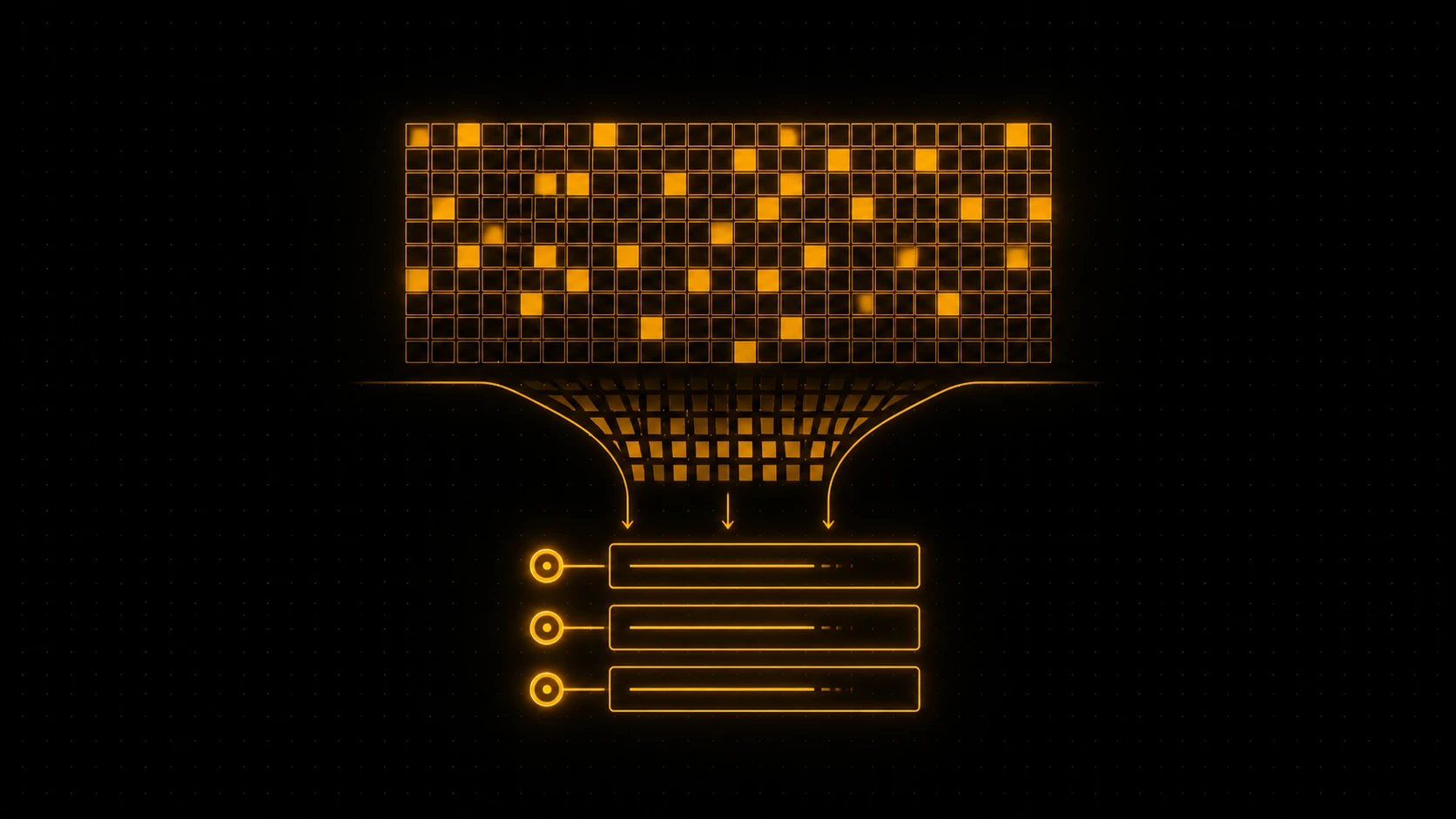
For a long time this mostly worked, because faking was effortful and the interview caught the rest. That equilibrium is breaking. When an AI can generate a plausible project, a clean commit history, and a confident write-up in an afternoon, the gap between looking capable and being capable widens, and every claim-based signal loses value at the same time. The reflex is to ask for more signals. The better move is to ask for a different kind of signal entirely.
This is the reframe at the center of everything DevClocked is built around. It is not a profile problem, where the answer is a nicer page about yourself. It is a proof problem, where the answer is evidence that does not depend on trusting the person making the claim. Once you see the distinction, most developer credentials sort cleanly into one bucket or the other, and almost all of the familiar ones land on the wrong side.
Claims versus proof
A claim is anything you assert about your work. Proof is anything that holds up when someone checks it without your help. The test is simple: if the only thing backing a statement is your own word, it is a claim. Resumes, self-written project descriptions, and "trust me, I led that" are claims. They are not worthless, but they are unverifiable, and unverifiable signals are exactly the ones that inflate when faking gets cheap.
Proof is different because it survives scrutiny. An audited record of what shipped, when, and traceable to the source, does not ask anyone to take your word for it. The work speaks, and someone skeptical can follow it back to where it actually happened. This is why proof beats a better claim every time: a stronger claim still collapses the moment someone doubts you, while proof was built for that moment. The whole value is that it works precisely when trust is low.
What real proof of work looks like
If claims are out, the question becomes what actually counts as proof for a developer, and it is more specific than "a good GitHub." Real proof has a few properties that padded signals lack.
It is continuous, not curated. A single impressive repo is a snapshot you chose. A record of work over time is much harder to fake convincingly, because consistency across months is its own signal. It is traceable, meaning a claim about shipping something connects back to the actual source and history, not just a screenshot. And increasingly it is attributable, meaning it can speak to how much of the work was yours versus generated, which is the question quietly sitting under every 2026 hiring conversation.
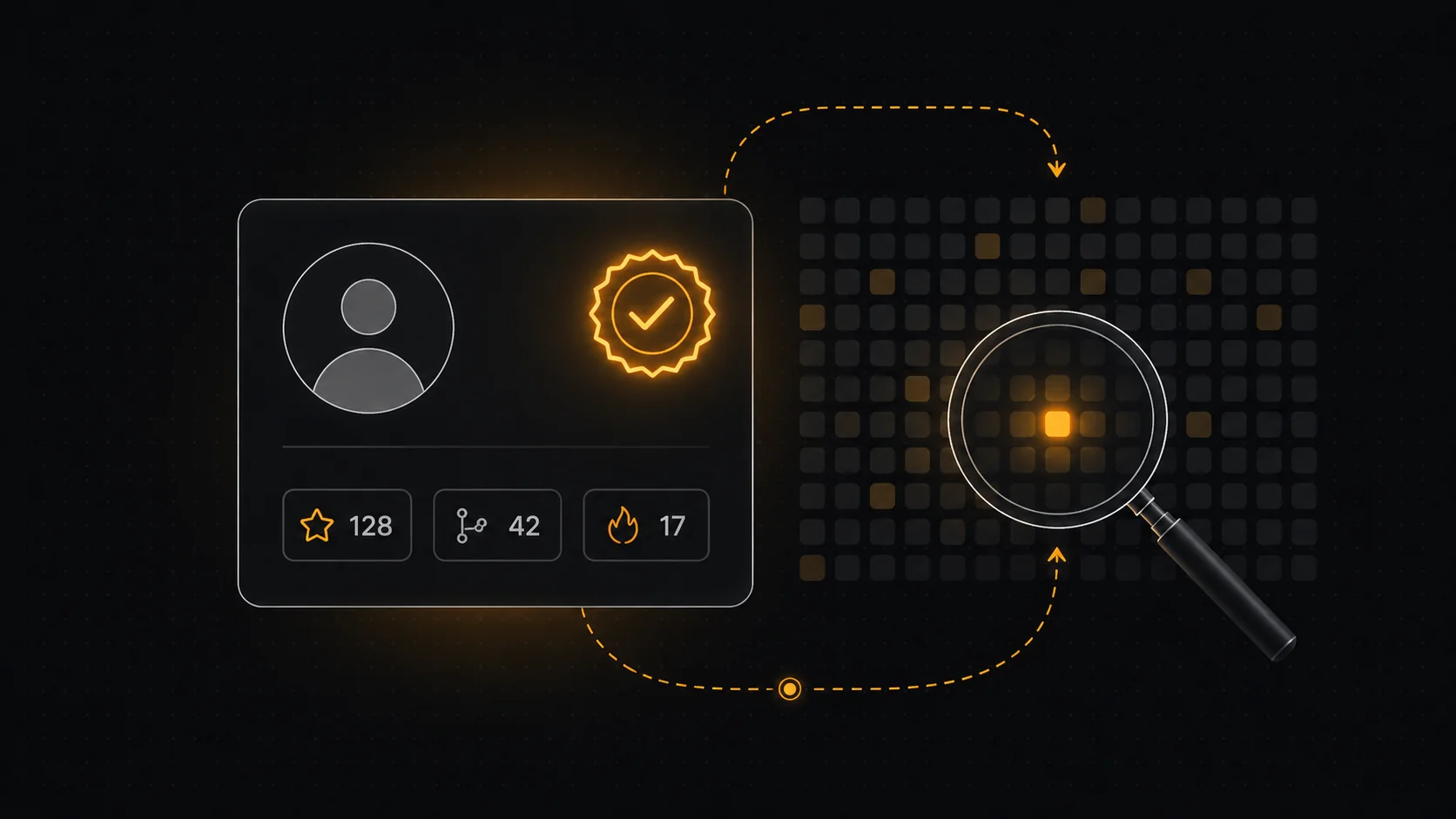
This is also where the green-square graph falls down, and it is worth being precise about why. The graph proves that activity happened, not that you did meaningful work, and not that the work was yours. It is a claim wearing the costume of evidence. Real proof is the audited trail underneath it: what shipped, traced to source, over time. See why git commits and green squares mislead and how to verify GitHub contributions for the mechanics of that gap.
Why this matters more in the AI era
The rise of AI coding did not create the proof problem, but it detonated it. When you write every line yourself, "I built this" is roughly true even if unverified. When an agent generates much of the code, the same sentence covers a huge range, from "I architected and drove this" to "I prompted and pasted." Both produce similar-looking output and similar-looking commits. The claim no longer distinguishes them.
That is bad news for claims and good news for proof. The harder it is to tell capability from output, the more valuable a verifiable record becomes, because it answers the question the output cannot: what did this person actually do. A developer who can point to an audited trail of real, attributable work has something an AI-generated portfolio cannot replicate, which is provenance. In a market flooded with plausible-looking work, provenance is the scarce thing. For the deeper version of this argument, see how to prove you wrote the code.
Where DevClocked fits
DevClocked exists to make proof the default instead of the exception. It builds a record of your real work from git activity and a CLI tracker, audited to source, and turns it into a profile that shows what you shipped over time rather than a page of claims about yourself. Think of it as the difference between telling someone you run and showing them the log of every run. That is the whole idea, and it is why the positioning is Strava for coding: the record is the credential.
It would be dishonest to pretend this is the only thing that matters in getting hired or trusted. A strong interview, a clear way of explaining your decisions, and genuine skill still carry the day, and proof does not replace them. If you have never shipped anything yet, there is nothing to audit, and you are better served building first. DevClocked earns its place when you have real work behind you and you are tired of that work being invisible or unverifiable. It does not make you a better developer. It makes the developer you already are impossible to doubt.
Related Guides
- How to verify GitHub contributions: why graphs can lie and how to check the real record.
- How to prove you wrote the code: provenance and authorship in the AI era.
- Strava for coding: the record as the credential, explained.
- How to track coding time from git: the mechanism that builds the audited trail.