The 30-second interruption that costs 23 minutes
Every developer knows the moment. You are deep in a problem, the pieces are finally lining up, and then a message arrives and pulls you out. The reply takes seconds. Getting back to where you were takes far longer, and that gap is the real cost almost nobody accounts for.
Quick Answer
A single interruption costs a developer far more than the interruption itself. Research from the University of California, Irvine found it takes about 23 minutes to fully return to a task after being pulled away. So a 30-second Slack reply is not a 30-second cost, it is a 30-second reply plus a long climb back into the problem you were holding in your head. At just four interruptions a day, that recovery time adds up to roughly two lost hours daily, or around 500 hours a year. Below is the math, why coding is especially expensive to interrupt, and how to see and protect your focus.
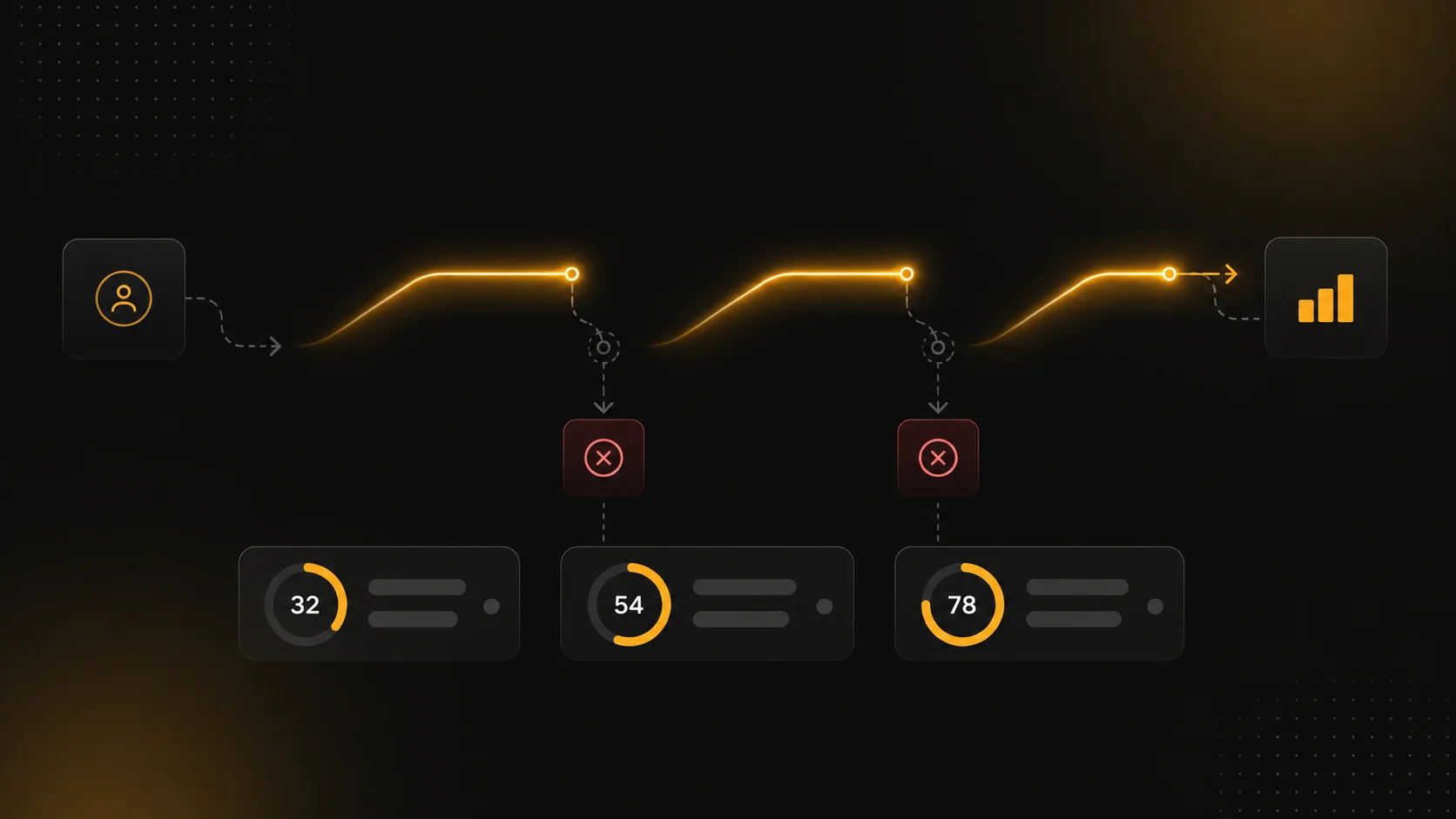
The number comes from research by Gloria Mark at UC Irvine, which found people take an average of 23 minutes and 15 seconds to return to the original task after an interruption. For developers the figure can run higher, because of what you are holding when you get interrupted. The cost was never the interruption. It was the reconstruction afterward, and the reconstruction is where the time goes.
Why coding is especially expensive to interrupt
Not all work is equally fragile, and software work sits at the expensive end. When you are deep in a codebase you are holding a large, perishable structure in working memory: variable states, function signatures, the call path you are tracing, the architectural decision you are halfway through. None of that is written down yet. It exists only in your head, and it is exactly the kind of state an interruption scatters.
When you get pulled away, your brain has to serialise all of that and store it, usually imperfectly, then rebuild it when you come back. Some of it does not survive, so you spend the recovery not just remembering where you were but reconstructing what you knew. This is why a developer interrupted mid-problem often comes back and stares at the screen for a few minutes: that is the rebuild happening. The deeper the work, the more there is to lose, and the longer the climb back.
The real cost, with numbers
The per-interruption figure sounds survivable until you do the yearly math, so let us do it. Take a conservative four interruptions a day, each costing about 25 minutes of recovery. That is roughly 100 minutes, nearly two hours, of lost productive time every single day, and that is before counting the interruptions themselves or any day that runs worse than average.
Stretch that across a working year and it lands somewhere near 500 hours, which is on the order of three months of working time lost to recovery alone. The framing worth sitting with is this: the most expensive thing in software development is not developer salaries, it is interrupted developers. You are paying for the time twice, once for the salary and once for the focus the interruptions quietly burn.
You cannot protect focus you cannot see
Here is the part that turns this from a complaint into something you can act on. Most developers dramatically underestimate how fragmented their days actually are, because the fragmentation is invisible in the moment. It is only when you look at your work reconstructed over a day that the pattern shows up, and the pattern is often a shock: many people find their longest uninterrupted stretch is under thirty minutes.
This is where passive measurement matters. If you track your sessions from your actual activity rather than from memory, you can see where the breaks happen, how long recovery really takes you, and which parts of the day are genuinely protected versus only theoretically protected. You cannot defend a focus window you cannot see, and you cannot tell whether a change helped if you were never measuring. Seeing the fragmentation honestly is the first real step toward fixing it. For the measurement approach, see how to measure flow state without breaking it and how to track coding time from git.
There is a 2026 angle worth adding. Working with AI agents introduces its own switching, between writing code, prompting, reviewing what an agent produced, and re-loading context each time. It can feel productive while quietly fragmenting your attention in a new way, which makes seeing your real session pattern more useful, not less.
Strategies for protecting flow
Once you can see the cost, a few habits do most of the work of reducing it. The point of each is the same: protect long, unbroken stretches, because that is where expensive recovery is avoided.
- Time-block for deep work. Schedule two to three hour blocks with notifications off, and treat them as real meetings with yourself.
- Batch communications. Check Slack and email at set times rather than continuously, so messages cost you one recovery, not ten.
- Default to async. Most "urgent" messages can wait an hour, and treating them that way protects everyone's focus, not just yours.
- Track your patterns. Use a passive tracker to find your real peak-focus hours and protect them deliberately.
Where DevClocked fits
DevClocked makes the cost visible. By reconstructing your sessions from real activity, it shows where your deep work happens and where it fragments, so you can protect the windows that matter and tell whether your changes are actually working. Because it captures terminal and AI-agent sessions too, it reflects how fragmented or focused your real 2026 workflow is, not just your editor time.
It is worth being clear about the boundary. DevClocked shows you the pattern, it does not enforce the discipline: it will not silence your notifications or defend your calendar for you. And if your interruptions come mostly from outside your machine, in-person drop-bys, back-to-back meetings, the data describes the damage but the fix is organisational. DevClocked earns its place when you want an honest, measured picture of your focus instead of a vague sense that your days feel choppy.
Related Guides
- How to measure flow state without breaking it: seeing and protecting deep work.
- How to track coding time from git: the passive measurement behind the session view.
- Why manual timesheets lie: why memory underestimates fragmentation.
- 9 best time tracking tools for developers: tools that reveal your focus patterns.